On October 20, 2025, the internet blinked. Apps like Snapchat, WhatsApp, Fortnite, and Venmo went dark. Smart homes froze. Businesses scrambled. The cause? A massive AWS outage one that reminded the world just how fragile centralized cloud infrastructure can be.
At 07:11 GMT, Amazon’s US-East-1 region in Virginia its largest data center suffered a cascading failure.
A faulty API update in DynamoDB triggered a DNS breakdown, severing the internet’s ability to find where data lived. Over 100 AWS services collapsed, from EC2 to S3, paralyzing global operations for hours.
AWS eventually restored service, but the damage was done. The outage exposed a growing truth: even the most sophisticated hyperscale clouds are still black boxes vast, centralized systems that hide their inner workings from the very customers who depend on them.
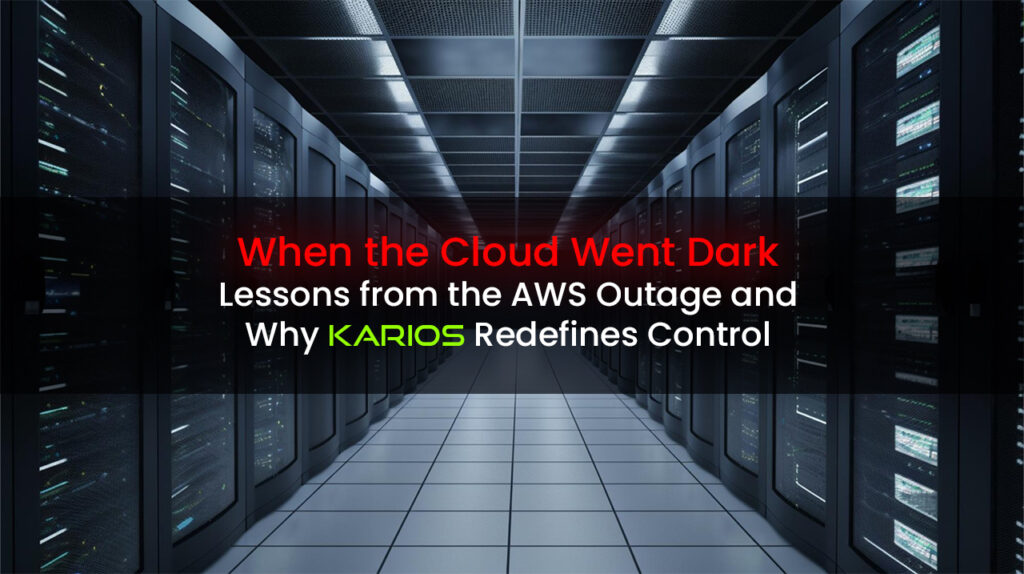
Enterprises have accepted the cloud’s convenience at the cost of control. When a hyperscaler fails, users can only wait and hope. No visibility. No autonomy. No accountability. This model worked when the cloud was new. But in a world where uptime equals revenue, that blind trust is unsustainable.
Karios Hyper-Converged Infrastructure (HCI) unites compute, storage, and networking in one intelligent, AI-driven platform giving organizations the power to run their workloads anywhere: on-prem, in the cloud, or at the edge.
Unlike legacy on-prem systems, Karios delivers:
During the AWS outage, millions waited for status pages to refresh. A Karios powered infrastructure would have already seen the warning signs. Karios delivers real-time telemetry across your data center compute, storage, networking, power, and cooling providing a full, intelligent picture of system health. It learns and predicts, helping teams act before failures cascade.
At the heart of the AWS failure was DNS — a single point of failure in a supposedly distributed system. Karios eliminates that weakness. Its distributed architecture, powered by Kubernetes and fault-tolerant orchestration, ensures that even if one site fails, your services stay online. Automated zone transfers, dynamic updates, and API-driven workflows mean no manual management just secure, self-healing operations.
The October AWS outage wasn’t just a disruption it was a wake-up call. The future doesn’t belong to invisible clouds that hide behind dashboards. It belongs to distributed, transparent, and intelligent infrastructure that you control. With Karios, you gain:
When the cloud stumbles, Karios stands firm, distributed, transparent, and efficient. Because true control isn’t about where your workloads live. It’s about seeing everything that keeps your world online.