Artificial Intelligence (AI) workloads are reshaping the modern enterprise, demanding unprecedented levels of efficiency, scalability, and resiliency from datacenter infrastructure. Traditional hyperconverged infrastructure (HCI) has laid the groundwork for simplification and consolidation, but the next evolution requires intelligence built directly into the operating system (OS) and hypervisor.
This whitepaper introduces how Karios has delivered a revolutionary AI-native HCI platform that integrates intelligent hardware provisioning, Kubernetes orchestration, power and thermal management, IoT integration, and built-in security ushering in a new era of AI-ready datacenter operations.
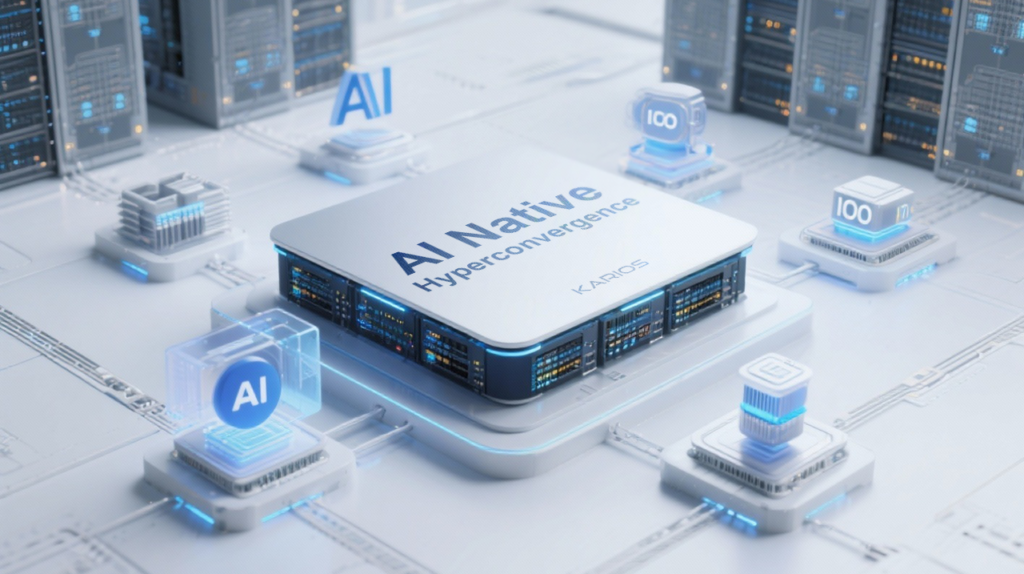
AI and machine learning workloads are characterized by:
Our AI-native HCI platform redefines infrastructure with an integrated operating system and hypervisor designed specifically for AI workloads:
Automatically optimizes compute, memory, and storage resources based on workload profiles. AI-driven algorithms ensure workloads receive the right resources without manual intervention.
Provides real-time visibility into all physical and virtual assets, enabling streamlined operations and faster troubleshooting.
Seamlessly deploys and scales containerized AI workloads alongside traditional VMs. Hybrid orchestration ensures compatibility across diverse application environments.
Built to support very large deployments, from enterprise datacenters to hyperscale providers, without loss of efficiency.
Ensures continuous control and monitoring even when primary systems are unreachable, critical for global AI deployments.
Connects AI infrastructure to sensor networks, enabling edge intelligence for industries such as manufacturing, energy, and healthcare.
Optimizes workload placement based on energy efficiency and thermal thresholds. Reduces operational costs while supporting sustainability initiatives.
Embedded at the hypervisor and firmware levels, ensuring compliance with regulatory frameworks and protecting against hardware-level attacks.
In addition to its software-defined intelligence, the platform includes two key hardware solutions:
AI-native hyperconvergence represents the future of datacenter infrastructure. By integrating intelligent provisioning, Kubernetes orchestration, sustainability features, and hardware innovations, this next-generation datacenter OS empowers enterprises to:
Karios is pioneering the future of hyperconvergence with patented innovations across software and hardware. By merging efficiency, security, and sustainability, we are enabling enterprises to build the AI-native infrastructure required for tomorrow’s digital economy.