
Security at the Silicon: Firmware-Level and Hypervisor-Integrated Threat Protection

The Future of Embedded Security and How to Stop Hardware Interception and Firmware Tampering

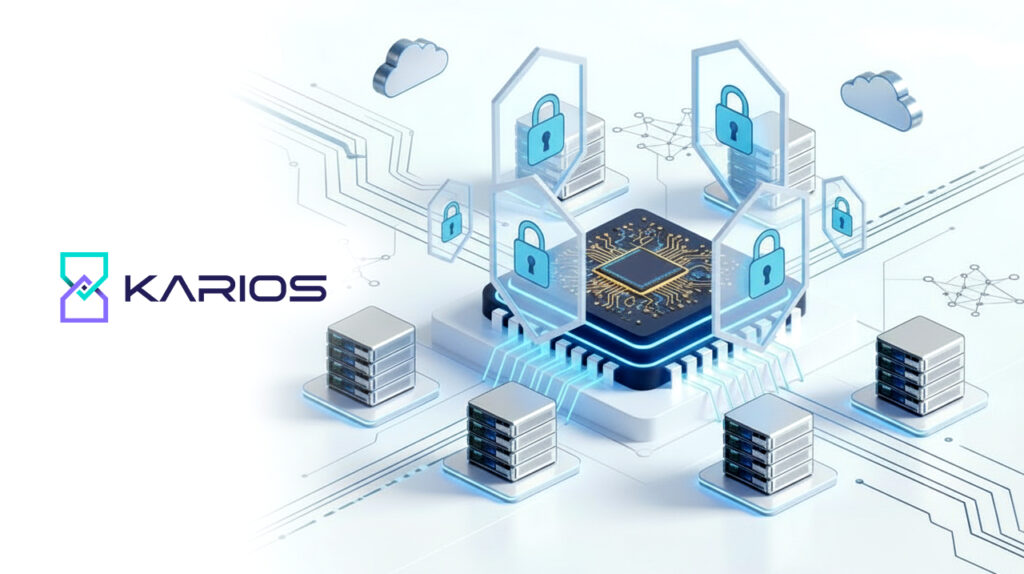
As compute infrastructure expands beyond traditional datacenters into remote, edge, and high-risk environments, security threats are evolving from software exploits to direct hardware and firmware manipulation. Malicious actors are increasingly targeting the silicon and system firmware the foundation of computing where compromises are difficult to detect and catastrophic in impact.

Karios Cube, our Micro-Modular Datacenter, represents a transformative step forward. Compact, energy-efficient, and resilient, it combines our advanced hyperconverged infrastructure (HCI) software with patented hardware innovations to deliver enterprise-class computing in a unit just two feet per side. This innovation provides secure, reliable, and cost-effective computing to environments where traditional datacenter deployments are impractical or economically unfeasible.
Introduction: The Hardware Threat Landscape

  • Firmware as the new attack surface: Attackers increasingly exploit BIOS, UEFI, BMCs, and device firmware, bypassing traditional endpoint security.
  • Hardware interception risks: Supply chain interception, interdiction, or covert tampering during shipment can introduce persistent threats before devices are even deployed.
  • Remote edge vulnerability: Edge deployments in rural or unmonitored sites present elevated risks of physical compromise.
 

Traditional security tools focus on applications and operating systems. The new frontier is defending below the OS.

Silicon-to-Hypervisor Integrated Security Architecture

Karios addresses these threats by integrating protection at two critical layers:

1. Firmware-Level Security

  • Cryptographic integrity checks: Continuous verification of BIOS/firmware using secure hashes and signed firmware images.
  • Trusted platform module (TPM) integration: Hardware-based roots of trust enforce tamper-resistant boot sequences.
  • Real-time firmware anomaly detection: Embedded monitoring detects unauthorized changes, malicious implants, or out-of-band rewrites.

2. Hypervisor-Integrated Protection

  • Deep firmware and hardware visibility: Our hypervisor monitors chipset telemetry, fan controllers, memory modules, and I/O devices for irregular activity.
  • Security scanning at the virtualization layer: Vulnerability scanning extends into firmware baselines.
  • Automatic quarantine: If suspicious hardware/firmware behavior is detected, the hypervisor alerts the user about the affected nodes while maintaining service continuity.

Innovations Driving Embedded Security

  • Intelligent hardware provisioning: Automated discovery of unauthorized or counterfeit hardware components.
  • Inventory management with cryptographic attestation: Every component (CPU, NIC, storage controller) is verified against known-good signatures.
  • Out-of-band asset management: Secure control of systems even when the main OS or hypervisor stack is compromised.
  • IoT integration security: Edge-connected IoT devices undergo integrity validation before joining the compute environment.

Use Cases and Deployment Scenarios

Enterprise Datacenters

  • Hardened compliance posture for audits (e.g., NIST, PCI DSS, HIPAA).
  • Defense against insider and supply-chain threats.

Edge and Remote Environments

  • Karios Cube “Datacenter-in-a-Box”: Ruggedized, portable, energy-efficient deployment with 48-hour battery backup and solar support.
  • Deployed in rural hospitals, military forward operations, or remote industrial sites where physical tampering risks are highest.

Global Connectivity

  • Secure operation across diverse network backbones (fiber, copper, microwave relay, 4G/5G, LEO satellite) without risk of firmware-based backdoors.

Karios PowerLink: Security Beyond Compute

The path forward is clear:
  • Energy auditing: Verification against carbon/LEEDs standards.
  • Tamper detection: Monitoring for anomalous power signatures that may indicate hardware implants.
  • Forensic utility: Logs of power events that can correlate with attempted firmware reprogramming or system manipulation.

Future of Embedded Security

Security is not just compute it’s energy. PowerLink, our in-line power monitoring tool, provides:
  • Security at the silicon is no longer optional, it is foundational.
  • Integration with hypervisors enables security to be continuous and workload-aware.
  • Resilience by design ensures infrastructure can operate securely even under attempted compromise, protecting both enterprise and edge deployments.

Conclusion: A Call to Action

Organizations cannot afford to ignore the risks posed by firmware and hardware-level threats. By embedding security directly at the silicon and integrating it with the hypervisor, Karios  delivers the future of trusted infrastructure resilient, secure, and ready for deployment anywhere in the world.