Ever feel like Kubernetes is a double-edged sword? It’s the powerhouse for modern apps, but deploying or scaling it often turns into a black hole of labor, tools, and skyrocketing cost.
Whether you’re deployment a fresh cluster or wrestling with a existing beast that’s already eating your budget alive, the pain is real: fragmented ops, expertise gaps, and costs that balloon from “affordable” to absurd (think $506K/year for a modest 3-node setup).
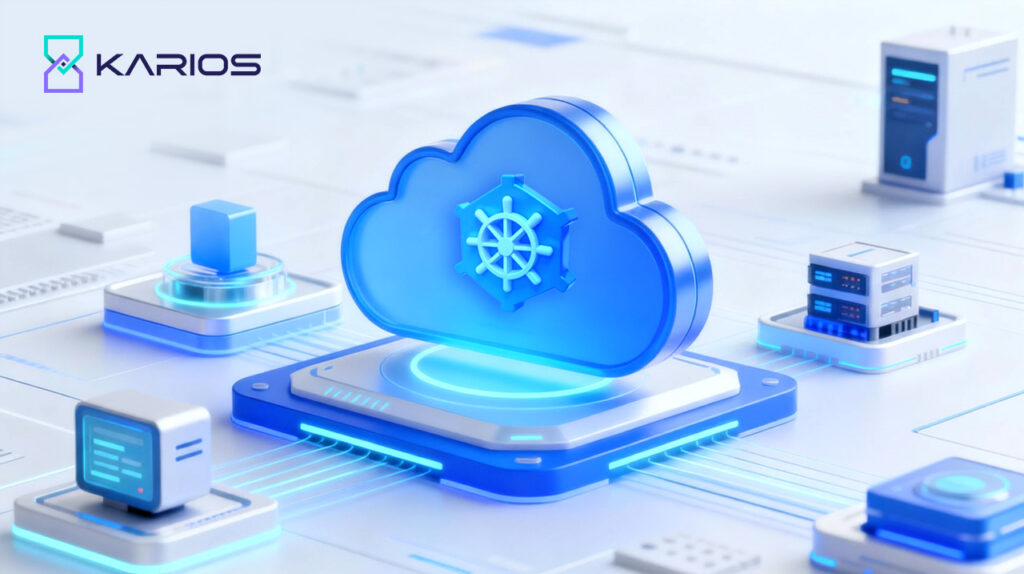
At Karios, we’re not just another Kubernetes overlay, we’re the unified HCI OS that converges compute, storage, networking, and full-lifecycle ops into one seamless platform. No more juggling 8-12 disparate tools, no SRE army required, and definitely no vendor lock-in nightmares.
This isn’t hype, it’s engineered reality. Built from the ground up, Karios embeds bare-metal provisioning, zero-touch orchestration, integrated observability, DCIM, security scanning, patch automation, CI/CD, DR, and even sustainability telemetry under a single license.
We’re talking 94% TCO savings for small-scale pilots and 55% at enterprise scale, turning what used to be a $1.77M annual sinkhole into predictable, green ops that let your team focus on innovation, not firefighting.
If you’re starting from scratch, maybe a mid-market team in finance or manufacturing eyeing Kubernetes for DevOps velocity, traditional platforms like EKS, GKE, or OpenShift lure you in with low upfronts, only to bury you in labor-intensive setups and tool sprawl.
During the AWS outage, millions waited for status pages to refresh. A Karios powered infrastructure would have already seen the warning signs. Karios delivers real-time telemetry across your data center compute, storage, networking, power, and cooling providing a full, intelligent picture of system health. It learns and predicts, helping teams act before failures cascade.
At the heart of the AWS failure was DNS a single point of failure in a supposedly distributed system. Karios eliminates that weakness. Its distributed architecture, powered by Kubernetes and fault-tolerant orchestration, ensures that even if one site fails, your services stay online. Automated zone transfers, dynamic updates, and API-driven workflows mean no manual management, just secure, self-healing operations.
Migrating away from legacy platforms like VMware and Nutanix to our next-generation HCI platform enables companies to dramatically reduce costs, improve efficiency, ensure compliance, and unlock new levels of scalability and agility. With Karios PowerLink and Karios Cube, enterprises can extend these benefits to the edge and remote locations, all while advancing sustainability initiatives and strengthening security posture.
Organizations ready to modernize their infrastructure, reduce costs, and embrace a more sustainable, secure, and agile future should evaluate our platform today. Let us help you chart a clear migration path away from legacy virtualization toward the next evolution of HCI.